





Dr. Vijay Kumar Singh
Institute of Advanced Study in Science and Technology
Vigyan Path, Paschim Boragaon Garchuk,Guwahati, Assam 781035, India
Ph No.: +91-361-2270095, Ext-309.
Email: vijay.singh@iasst.gov.in
 Google Scholar
 ORCID
ORCID Biodata
Infectious Diseases & Antimicrobial Resistance.
Faculty Appointments:
- Assistant Professor II- Institute of Advanced Study in Science and Technology, Guwahati, India (10/2023-now)
- Assistant Professor- Academy of Scientific & Innovative Research (AcSIR), Ghaziabad, India (1/2024-now)
- Faculty, Instructor in surgery- Massachusetts General Hospital & Harvard Medical School, Boston, USA (9/2023-10/2023)
- Scientist- Shriners Hospital for Children, Boston, USA (5/2023-10/2023)
Postdoctoral Training:
- Postdoctoral Research Fellow- Department of Surgery, Massachusetts General Hospital & Harvard Medical School, Boston, USA (01/2018-08/2023)
- Postdoctoral Research Fellow- Department of Microbiology, Harvard Medical School, Boston, USA (01/2018-08/2023)
- Postdoctoral Research Fellow- Shriners Hospital for Children, Boston, USA (05/2018-05/2023)
- National Postdoctoral Fellow-CSIR-Institute of Microbial Technology, Chandigarh, India (04/2017-01/2018)
Education:
- Ph.D. in Biotechnology- CSIR-Central Salt & Marine Chemicals Research Institute/ MKBU, Bhavnagar, Gujarat (2017)
- M. Sc in Biotechnology- Lalit Narayan Mithila University, Darbhanga, Bihar (2010)
- B. Sc in Botany (Hons)- C. M. Science Collage, Darbhanga, Bihar (2007)
Awards and Honors:
- Prime Minister Early Career Research Grant -Anusandhan National Research Foundation (ANRF), 2025
- Indo-U.S. Postdoctoral Fellow-Indo-U.S. Science and Technology Forum and Science and Engineering Research Board, Department of Science and Technology, Government of India (2017)
- NPDF- Science and Engineering Research Board (SERB), Department of Science and Technology, Government of India (2016)
- Best publication award of the institute- (Highest Impact Factor publication in Biological Sciences) CSIR-Central Salt & Marine Chemicals Research Institute, Bhavnagar, Gujarat (2016)
- Honors Bachelor of Science- LN Mithila University, Darbhanga, Bihar (2007)
Administrative Leadership Positions:
- Superintendent Students' Home- Institute of Advanced Study in Science and Technology, Guwahati (05/2025- Now)
- In-Charge Guest House- Institute of Advanced Study in Science and Technology, Guwahati (07/2024- Now)
- Research Safety Committee Member- Massachusetts General Hospital and Massachusetts General Research Institute, Boston (2021-2023)
- Covid Safety Officer- Massachusetts General Hospital and Massachusetts General Research Institute, Boston (2021-2023)
- Biosafety Officer- Molecular Surgical Laboratory, Massachusetts General Hospital, Boston (2021-2023)
- Radiation Safety Officer- Molecular Surgical Laboratory, Massachusetts General Hospital, Boston (2021-2023)
- In charge-Controlled Substances-Molecular Surgical Laboratory, Massachusetts General Hospital, Boston (2021-2023)
25. Catarina Angeli Santos, Emília Maria França Lima, Cristina M.T.S. Miguel, Victor Hugo Santiago Peron, Vijay K. Singh, Uelinton Manoel Pinto (2026). Plant-derived quorum sensing inhibitors: A systematic review for food and health applications. Food and Humanity. 17, 1837929.
24. Sayani Roy, Kamalina Choudhury, Uelinton Manoel Pinto, and Vijay K. Singh* (2026). The dual threat of hypervirulent and multidrug-resistant Klebsiella pneumoniae: pathogenesis and prospects for intervention. Frontiers in Microbiology. 17, 1837929.
23. Shifu Aggarwal, Arijit Chakraborty, Vijay Kumar Singh, Stephen Lory, Katia Karalis, and Laurence G. Rahme (2025). Revealing the impact of Pseudomonas aeruginosa quorum sensing molecule 2’-aminoacetophenone on the human bronchial-airway epithelium and pulmonary endothelium using a human airway-on-a-chip. Frontiers in Immunology. 16,1592597.
22. Shifu Aggarwal, Arijit Chakraborty, Vijay Singh, Stephen Lory, Katia Karalis, and Laurence G. Rahme (2025). Revealing the impact of Pseudomonas aeruginosa quorum sensing molecule 2’-aminoacetophenone on human bronchial-airway epithelium and pulmonary endothelium using a human airway-on-a-chip. bioRxiv (2025): 2025-03.
21. Shifu Aggarwal, Vijay Kumar Singh, Arijit Chakraborty, Sujin Cha, Alexandra Dimitriou, Claire de Crescenzo, Olivia Izikson et al.(2024). Skeletal muscle mitochondrial dysfunction mediated by Pseudomonas aeruginosa quorum-sensing transcription factor MvfR: reversing effects with anti-MvfR and mitochondrial-targeted compounds. mBio, 15, e01292-24.
20. Arijit Chakraborty, Arunava Bandyopadhaya, Vijay Kumar Singh, Filip Kovacic, Sujin Cha, William M. Oldham, A. Aria Tzika, and Laurence G. Rahme (2024). The bacterial quorum sensing signal 2’-aminoacetophenone rewires immune cell bioenergetics through the Ppargc1a/Esrra axis to mediate tolerance to infection. eLife 13, RP97568.
19. Arunava Bandyopadhaya, Vijay Kumar Singh, Arijit Chakraborty, A. Aria Tzika, and Laurence G Rahme (2022). Immunometabolic hijacking of immune cells by a Pseudomonas aeruginosa quorum-sensing signal. bioRxiv, DOI:10.1101/2021.10.03.462785.
18. Vijay K. Singh, Marianna Almpani, Kelsey M. Wheeler, and Laurence G. Rahme (2023). Interconnections of Pseudomonas aeruginosa quorum sensing systems in intestinal permeability and inflammation. mBio, 14, e03524-22.
17. Vijay K. Singh, Marianna Almpani, Damien Maura, Tomoe Kitao, Livia Ferrari, Stefano Fontana, Gabriella Bergamini, Elisa Calcaterra, Chiara Pignaffo, Michele Negri. et. al., (2022). Tackling Recalcitrant Pseudomonas aeruginosa Infections In Critical Illness via Anti-virulence Monotherapy. Nature Communications, 13, 5103.
16. Ankita Alexander, Vijay Kumar Singh, and Avinash Mishra (2022). Introgression of a novel gene AhBINR differentially expressed during Brachybacterium saurashtrense-Arachis hypogaea interaction gene AhBINR enhances plant performance under nitrogen starvation and salt stress in tobacco. Plant Science, 324, 111429.
15. Vijay Kumar Singh, Marianna Almpani and Laurence G. Rahme. (2021) The role of common solvents against Pseudomonas aeruginosa-induced pathogenicity in a murine burn-site infection model. Microbiology Spectrum, 2, e00233-21.
14. Tchakal-Mesbahi, Asma, Merzak Metref, Vijay Kumar Singh, Marianna Almpani, and Laurence G. Rahme. (2021). Characterization of antibiotic resistance profiles in Pseudomonas aeruginosa isolates from burn patients. Burns, 8,1833-1843.
13. Ankita Alexander, Vijay Kumar Singh, and Avinash Mishra (2021). Overexpression of differentially expressed AhCytb6 gene during plant-microbe interaction improves tolerance to N2 deficit and salt stress in transgenic tobacco. Scientific Reports, 11, 1- 20.
12. Ankita Alexander, Vijay Kumar Singh, and Avinash Mishra (2021). Interaction of the novel bacterium Brachybacterium saurashtrense JG06 with Arachis hypogaea leads to changes in physio-biochemical activity of plants to cope with nitrogen starvation conditions. Plant Physiology and Biochemistry, 166, 974-984.
11. Almpani, Marianna, Asma Tchakal-Mesbahi, Merzak Metref, Vijay K. Singh, and Laurence G. Rahme. (2020) First Report of Pseudomonas aeruginosa Isolates Harboring the CTX-M2 and PER genes in Algeria. Open Forum Infectious Diseases, 7, S461.
10. Ankita Alexander, Vijay Kumar Singh, and Avinash Mishra (2020). Halotolerant PGPR Stenotrophomonas maltophilia BJ01 induces salt tolerance by modulating physiology and biochemical activities of Arachis hypogaea. Frontiers in Microbiology 11, 2530.
9. Ankita Alexander, Vijay Kumar Singh, Avinash Mishra, and Bhavanath Jha (2019). Plant growth promoting rhizobacterium Stenotrophomonas maltophilia BJ01 augments endurance against N2 starvation by modulating physiology and biochemical activities of Arachis hypogea. PloS one, 14, e0222405.
8. Vijay Kumar Singh, Avinash Mishra, and Bhavanath Jha (2019). 3-Benzyl-hexahydro- pyrrolo[1,2-a] pyrazine-1,4-dione extracted from Exiguobacterium indicum showed anti- biofilm activity against Pseudomonas aeruginosa by attenuating the quorum sensing. Frontiers in Microbiology. 10, 1269.
7. Vijay Kumar Singh, Avinash Mishra, and Bhavanath Jha (2017). Anti-quorum sensing and anti- biofilm activity of Delftia tsuruhatensis extract by attenuating the quorum sensing-controlled virulence factor production in pseudomonas aeruginosa. Frontiers in Cellular and Infection Microbiology 7, 337.
6. Vijay Kumar Singh, Avinash Mishra, Intesaful Haque and Bhavanath Jha (2016). A novel transcription factor-like gene SbSDR1 acts as a molecular switch and confers salt and osmotic endurance to transgenic tobacco. Scientific Reports 6, 31686.
5. Bhavanath Jha, Vijay Kumar Singh, Angelo Weiss, Anton Hartmann and Michael Schmid (2015). Zhihengliuella somnathii sp. nov., a halotolerant actinobacterium from the rhizosphere of a halophyte Salicornia brachiata. International Journal of Systematic and Evolutionary Microbiology 65, 3137-3142.
4. Narendra Singh Yadav, Vijay Kumar Singh, Dinkar Singh, and Bhavanath Jha. (2014). A Novel Gene SbSI-2 Encoding Nuclear Protein from a Halophyte Confers Abiotic Stress Tolerance in E. coli and Tobacco. PloS One 9, e101926.
3. Kumari Kavita, Vijay Kumar Singh, Avinash Mishra, and Bhavanath Jha (2014). Characterisation and anti-biofilm activity of extracellular polymeric substances from Oceanobacillus iheyensis. Carbohydrate polymers, 101, 29-35.
2. Kumari Kavita, Vijay Kumar Singh, and Bhavanath Jha. (2014). 24-Branched Δ5 sterols from Laurencia papillosa red seaweed with antibacterial activity against human pathogenic bacteria. Microbiological research 169, 301-306.
1. Vijay Kumar Singh, Kumari Kavita, Rathish Prabhakaran, and Bhavanath Jha. (2013). Cis-9- octadecenoic acid from the rhizospheric bacterium Stenotrophomonas maltophilia BJ01 shows quorum quenching and anti-biofilm activities. Biofouling, 29, 855-867.
Funded Projects:
4. Development of NanoBioConjugates as Anti-Virulence Therapeutics Targeting Quorum Sensing and Biofilm in Multidrug-Resistant Pathogens
Funding: Department of Science and Technology (DST)-IASST, In-House (IASST/R&D/ICP/IHP-05/2026-27/ 1929)
Role: Principal Investigator, Total Direct Costs: ₹600000.00, Year: 2026-2028
3. Preclinical Assessment of a Compound from Rhizospheric Bacteria Against Multidrug-Resistant Pseudomonas aeruginosa
Funding: Department of Science and Technology (DST)-IASST, In-House (IASST/R&D/LSD/IHP-04/2026-27/ 1574-1581)
Role: Principal Investigator, Total Direct Costs: ₹1500000.00, Year: 2026-2028
2. Unraveling Host-Pathogen Dynamics and Anti-infective Therapeutics Using CRISPR-Cas9 for Tackling Multidrug-Resistant Pseudomonas aeruginosa Infection
Funding: Anusandhan National Research Foundation (ANRF),
Role: Principal Investigator, Total Direct Costs: ₹ 64,22,240.00, Year: 2025-2028
1. Discovery of quorum sensing inhibitors for the drug development against antibiotic-resistant bacterial infection
Funding: Department of Science and Technology (DST)-IASST, In-House (IASST/R&D/LSD/IHP-04/2024-25/ 701-708)
Role: Principal Investigator, Total Direct Costs: ₹1200000.00, Year: 2024-2026
Gopal P. Jadhav, Peter W. Abel, and Vijay K. Singh. (2026) Quorum Sensing Inhibitors as Novel Therapeutics Against Antibiotic-Resistant Bacterial Infections. Provisional US patent
Current members
डॉ. विजय कुमार सिंह
Principal Investigator


Postdoctoral Fellow

Dr. Sayani Roy, DBT-RA
The recent emergence of multidrug-resistant (MDR) Klebsiella pneumoniae (World Health Organization listed critical priority pathogen) with hypervirulent traits causing severe infections and considerable mortality is a global cause for concern. The challenges posed by these hypermucoviscous strains (hvKp) in treatment, management and control due to enhanced virulence factors like capsular polysaccharides, siderophores, and adhesins are yet to be answered. Given the urgent need, novel therapeutic strategies targeting and inhibiting the regulatory genes that control virulence in hvKp and mitigating the impact of these infections offer a promising approach. My study aims to identify small molecule inhibitors targeting these regulatory pathways to combat the growing threat of hvKp.
PhD students'
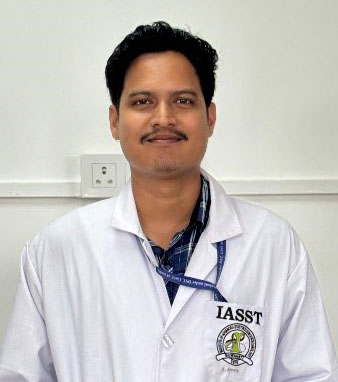
Abhishek Khersa, CSIR-JRF
Quorum sensing is a highly regulated signaling mechanism used by Pseudomonas aeruginosa to coordinate, virulence factor production, biofilm formation, etc., thus ultimately leading to the development of drug tolerance and multi-drug resistance in the bacteria. The rise of multidrug-resistant in P. aeruginosa is a significant global contributor to nosocomial infections, particularly in immunocompromised patients. My research focus is to discover novel anti-quorum sensing agents with the potential to suppress multidrug resistance in P. aeruginosa for translational applications.

Kamalina Choudhury, Institutional-JRF
My research is focused on attenuating bacterial virulence and disrupting quorum sensing (QS) using natural compounds, especially from traditional practices and biodiversity-rich regions like Northeast India. This approach targets bacterial communication pathways to reduce pathogenicity without inducing resistance. The work combines traditional knowledge with modern techniques to identify sustainable alternatives to conventional antibiotics.
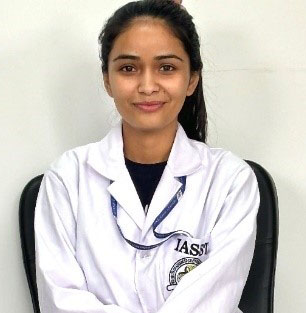
Sanjana Ginwal, Institutional-JRF
My research aim is to identify host regulators of Pseudomonas aeruginosa phenotypic states to understand transcriptional regulation in disease persistence. Using genome-wide screening and gene editing, it investigates host factors that contribute to establishing bacterial latency, providing insights into chronic infections. This study will bridge the gap between host-pathogen interactions and chronic infection dynamics for developing targeted therapies against persistent bacterial infections.

Dipshikha Das, Project Assistant-I
My research focuses on utilizing the advanced CRISPR-Cas9 system to unravel host-pathogen interactions and develop novel anti-infective therapeutics against multi-drug resistant (MDR) Pseudomonas aeruginosa. I am working on a project titled “Unraveling Host-Pathogen Dynamics and Anti-infective Therapeutics Using CRISPR-Cas9 for Tackling Multi-Drug Resistant Pseudomonas aeruginosa Infection,” which aims to explore molecular mechanisms driving infection and resistance. My prior work encompassed three independent projects, providing a strong foundation in clinical and applied microbiology, including studies on urinary tract infection (UTI) pathogenesis, ESBL-producing Klebsiella, and nanobiotechnology-based antimicrobial applications. Together, these experiences strengthen my pursuit of precision therapeutics to combat antimicrobial resistance.
Research Interns'
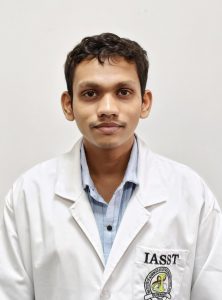
Sagar Manoj Date
Pursuing M.Sc. Life Science, Sandip University

Rangjali Boro
Pursuing M.Sc. Zoology, Handique girl’s College, Guwahati
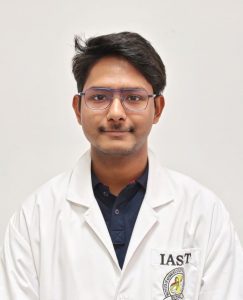
Arkadeep Das
Pursuing M.Sc. Biotechnology, SRM Institute of Science and Technology
Singh Lab's alumni
8. Simran Sharma, Maharshi Dayanand University, Rohtak
7. Prajukta Saikia, Gauhati University, Guwahati
6. Naina Hasan, Pub Kamrup College, Assam Science and Technology University.
5. Gunjan Gaigowal, Dr. Ambedkar College, Nagpur
4. Dharitry Dehingia, M. Sc. in Life Science, Digboi College, Digboi
3. Trinayan Boruah, M. Sc. in Life Science, Digboi College, Digboi
2. Om Gupta, B.Sc. in Biotechnology, Chatrapati Shahu Ji Maharaj University, Kanpur
1. Kaushalendra Mishra, M.Pharm. Teerthanker Mahaveer University, Delhi Road, Moradabad
Singh Lab is hiring at multiple levels (Postdoctoral fellow, JRF, Project Assistant, Dissertation, and Internship). Please reach out at vijay.singh@iasst.gov.in if you are interested in Infectious Diseases, Quorum Sensing, Biofilm, Host-Microbe interaction, and Antimicrobial Resistance.