



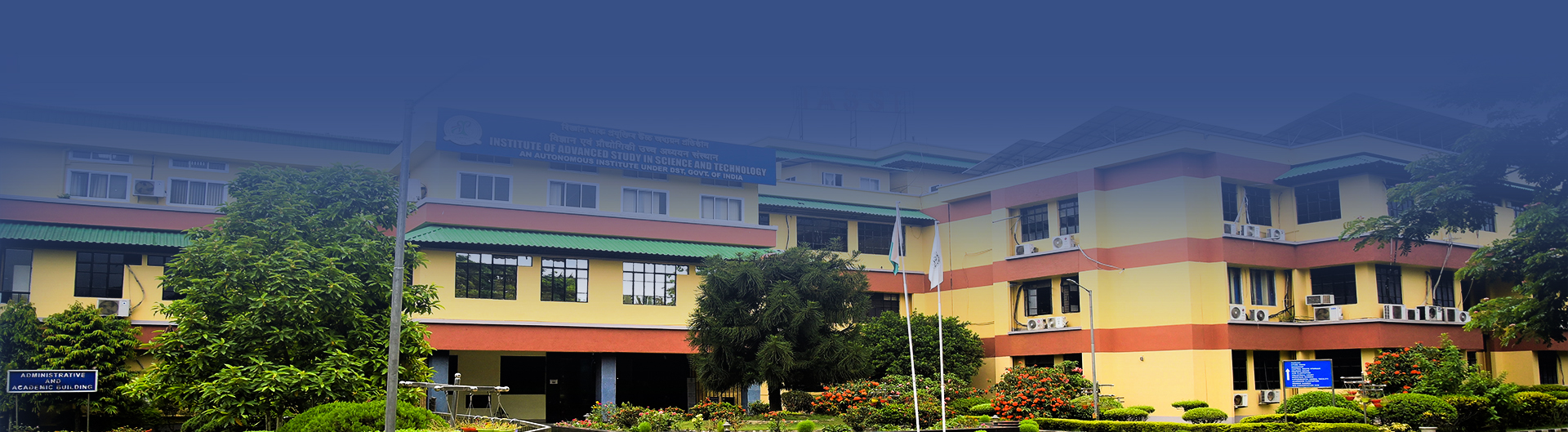
The Centre for Interdisciplinary Research at the Institute of Advanced Study in Science and Technology (IASST) was formally established based on a proposal approved during the 14th Governing Council (GC) meeting held in January 2021, which was renamed as the Interdisciplinary Research Cell as per the approval of the 19th GC meeting held in March 2025.
The primary goal of the cell is to create large, dynamic working groups focused on addressing complex and impactful R&D challenges. By integrating diverse perspectives and expertise, the cell aims to drive advancements in key areas of science and technology, promoting cutting-edge research and translating discoveries into practical applications. The establishment of this cell reflects IASST’s commitment to leveraging interdisciplinary approaches to tackle regional, national, and global challenges, enhancing its stature as a hub for advanced scientific research.
Vision
This cell envisages to address critical issues of regional/national/global importance by bringing together researchers from various disciplines.
Mission
To foster a vibrant interdisciplinary research ecosystem at IASST that integrates expertise from diverse scientific disciplines, to promote collaborative innovation, and to address complex R&D challenges to drive impactful scientific discoveries and technological advancements.
Objectives
- Focus on Key R&D Areas: Prioritize interdisciplinary research in strategic fields such as:
- Healthcare
- Climate change and environment
- Energy
- Advanced Materials
- Food Security and Sustainable Agriculture
- Build Capacity: Develop advanced infrastructure and provide training to support high-quality interdisciplinary research initiatives.
- Encourage Innovation: Foster the development of novel methodologies, ideas, and technologies through collaborative efforts across disciplines.
- Foster Knowledge Exchange: Organize workshops, seminars, and conferences on interdisciplinary research to promote the exchange of ideas and expertise among researchers, institutions, and industries.
- Translate Research: Ensure that research outcomes are translated into practical applications that benefit society and industry.
- Attract Talent: Encourage young researchers and experts to contribute to the Cell’s vision and mission, enriching the interdisciplinary research environment.
- Enhance Funding Opportunities: Secure research grants and establish partnerships with national and international organizations to support and expand the Cell’s activities.
| Sl No | Faculty name | Interdisciplinary research area |
|---|---|---|
| 1 | Prof. A. K. Mukharjee | A. Nanobiotechnology B. Image Processing |
| 2 | Prof. H. Bailung | Cold Plasma for Biomedical application |
| 3 | Prof. Neelotpal Sen Sarma | Plasmonic Materials with Dr. A.R.Pal and remediation of industrial effluent with Dr Arundhuti Devi. |
| 4 | Dr. Devasish Chowdhury | Nanobiotechnology / Biotechnology |
| 5 | Dr. Mojibur R. Khan | Smart device for microbial detection |
| 6 | Dr. R. Devi | A. Nanotechnology / Biotechnology B. Phytochemistry C. Medicinal aspect of Musa balbisiana |
| 7 | Dr. Sarathi Kundu | Soft matters and nanomaterials in biological sciences |
| 8 | Dr. Jagat C Borah | A. Therapeutic potential and chemical profiling of edible mushroom (Dr. Ashis K Mukherjee), B. Nutraceutical potential and chemical profiling of vegetables/medicinal plants used by ST/SC community of NE India (Dr. Mojibur R Khan, ST-SC project) C. Exploration of Musa balbisiana for economic benefits of ST/SC community of Assam, (Dr. Rajlakshmi Devi, SEED-DST project), D. QAQC of herbal products (Dr. Ashis K Mukherjee and Dr. Rajlakshmi Devi). |
| 9 | Dr.Arundhuti Devi | A. Remediation Techniques for Contaminated Sites B. Modelling for Air Quality Research using AI C. Chemical Biology D.Mathematical modeling and climate-change effect. |
| 10 | Dr. Santu Das | Biodiversity |
| 11 | Dr. Kamatchi Sankaranarayanan | Biophysics, Plasma applications in biology, Biomaterials |
| 12 | Dr. L. B. Mahanta | A. Modelling for Air Quality Research using AI B. Application of AI in the analysis of Venomous Snake Bite and study of FITC fluorescence conjugated synthetic peptides as binders to breast cancer tissues |
| 13 | Dr. Subir Biswas | Plasma Physics and Biological/Medical Science |